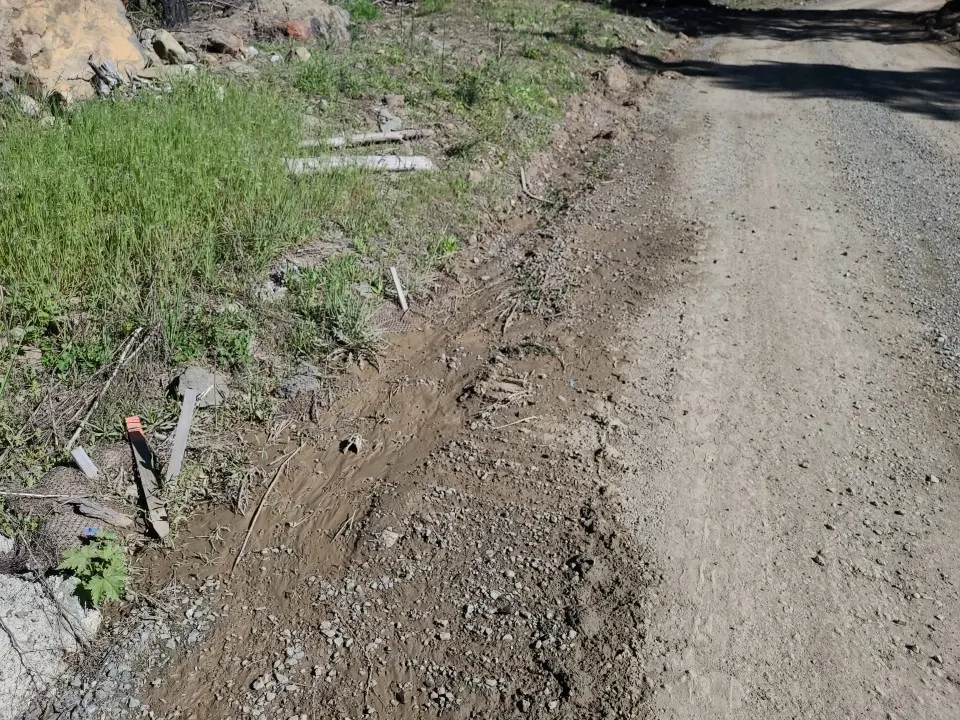
Trace the water upstream of the damage
Loose gravel at the bottom of a slope is evidence of material movement, not the whole problem. Look for water entering from higher ground, concentrated flow in wheel tracks and an unstable outlet. Replacing the missing base and gravel works best when that water path is also addressed.
Signs to look for
- Channels cut down the wheel path
- Gravel collects at the bottom of a slope
- Edges wash away
- A crossing flow carves through the drive
- Snowmelt reopens the same damage
Rebuild access and interrupt recurring erosion
- 01Identify where runoff enters and exits
- 02Rebuild eroded base and surface material
- 03Adjust crown, cross-slope or grade
- 04Add or restore ditches, swales or a culvert when appropriate
- 05Compact repaired sections
What determines the washout repair scope
Length and depth of erosionWater volume and sourceSlope and outlet locationBase lossCulvert or ditch work
Compare materials and scope with the gravel and road-base guide.
Questions about this work
Will another load of gravel stop a washout?
It can replace lost material, but gravel alone will not stop water following the same path. The repair also needs to address surface shape and runoff.
Does snowmelt matter in southeastern Idaho?
Yes. Rapid warming can send water over frozen or saturated ground. Driveway drainage should be checked before meltwater finds low spots or wheel paths.