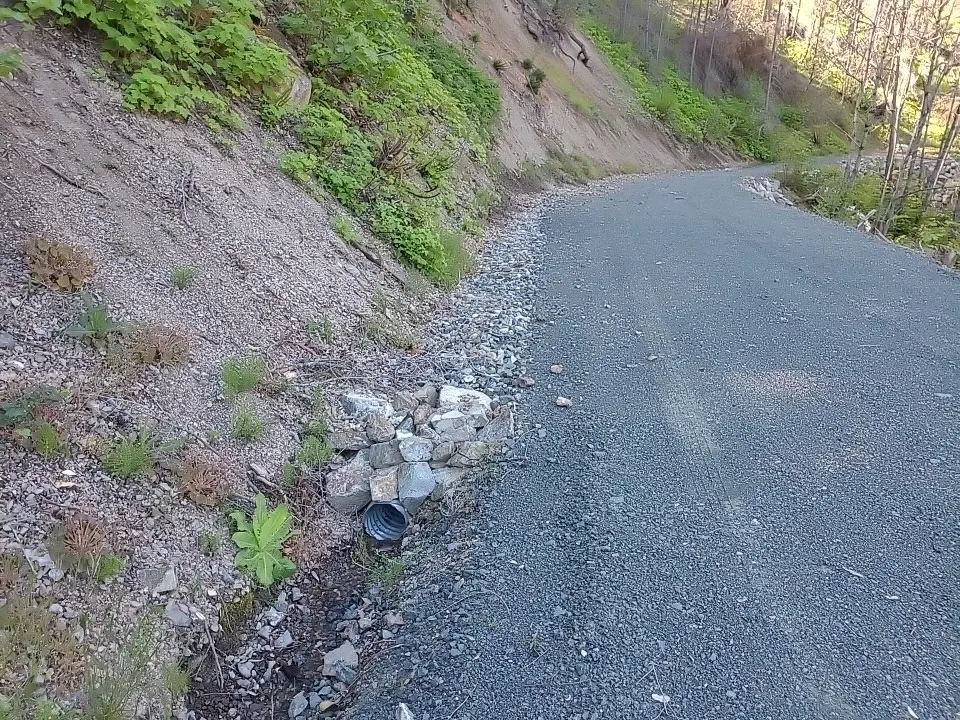
Follow runoff all the way to an outlet
Moving water off one low spot can simply move the problem downhill. A useful drainage plan considers the driveway surface, roadside ditch or swale, any crossing and a stable outlet. Neighboring property and the public right of way also constrain where water can go.
Signs to look for
- Standing water remains after storms
- Runoff crosses the driving surface
- A ditch is full or poorly aligned
- Mud returns in the same low spot
- Water exits where it erodes the shoulder
Coordinate the surface, channels and crossings
- 01Observe slope, low points and runoff paths
- 02Restore crown or cross-slope
- 03Shape ditches or shallow swales
- 04Repair outlets and erosion areas
- 05Install or replace a culvert when water must cross
What changes a drainage correction plan
Source and volume of runoffAvailable fall to a stable outletSoil and base saturationSpace for ditches or swalesPublic-road and neighboring-property constraints
Compare materials and scope with the gravel and road-base guide.
Questions about this work
What is a drainage swale?
A swale is a broad, shallow channel shaped to move water across the landscape while slowing and spreading flow more gently than a steep ditch.
Can grading redirect all runoff?
Grading can improve surface flow, but some sites also need a ditch, swale, culvert or stabilized outlet. The full water path must be considered.