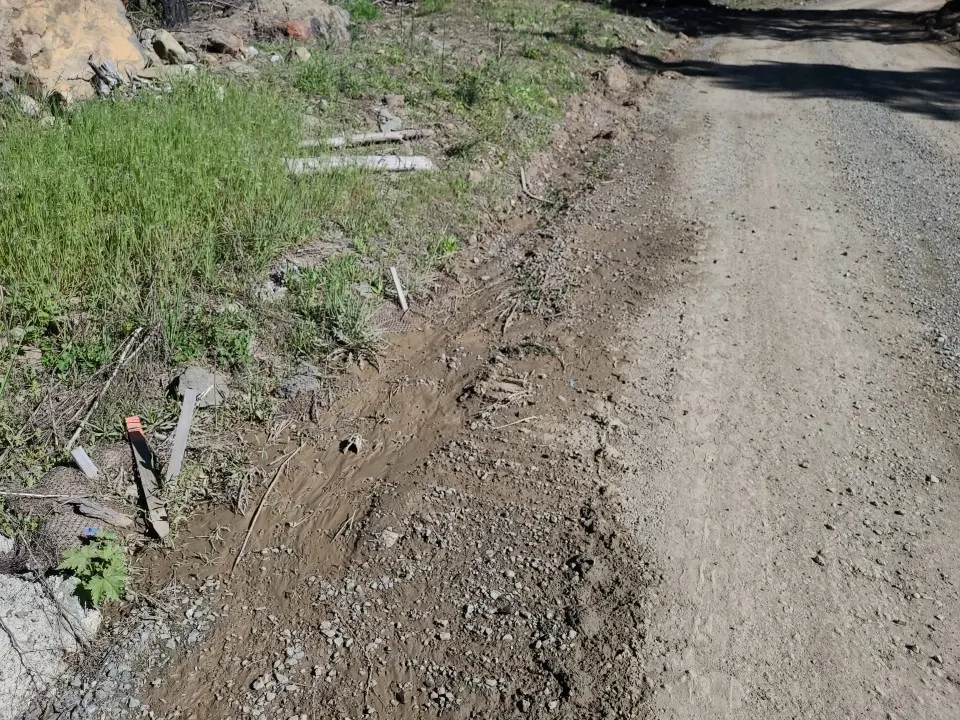
Find out why the same hole returns
A thin surface, trapped water and a weak base need different repairs. Top dressing renews a worn surface; it cannot stabilize every soft area. Persistent rutting may require unstable material to be removed and rebuilt before the driveway is reshaped and compacted.
Signs to look for
- Potholes return after every storm
- Wheel ruts hold water
- Muddy or pumping soft spots
- Thin gravel exposes the base
- Edges crumble or spread outward
Repair failed sections before resurfacing
- 01Trace water and inspect the failed area
- 02Rework or remove unstable material
- 03Repair the base where it has lost support
- 04Add and blend suitable aggregate
- 05Restore shape and compact
What separates a small repair from rebuilding
Depth and extent of damageBase stabilityAmount and type of new materialDrainage correctionsDriveway access and traffic
Compare materials and scope with the gravel and road-base guide.
Questions about this work
Why do potholes keep coming back?
Water collects in a depression, traffic pushes loose material aside, and the hole grows. Filling it without restoring drainage, shape and compaction often leaves the cause in place.
Is resurfacing the same as grading?
Grading reshapes material already on the driveway. Resurfacing adds a new gravel layer, usually after the underlying shape and trouble spots are corrected.